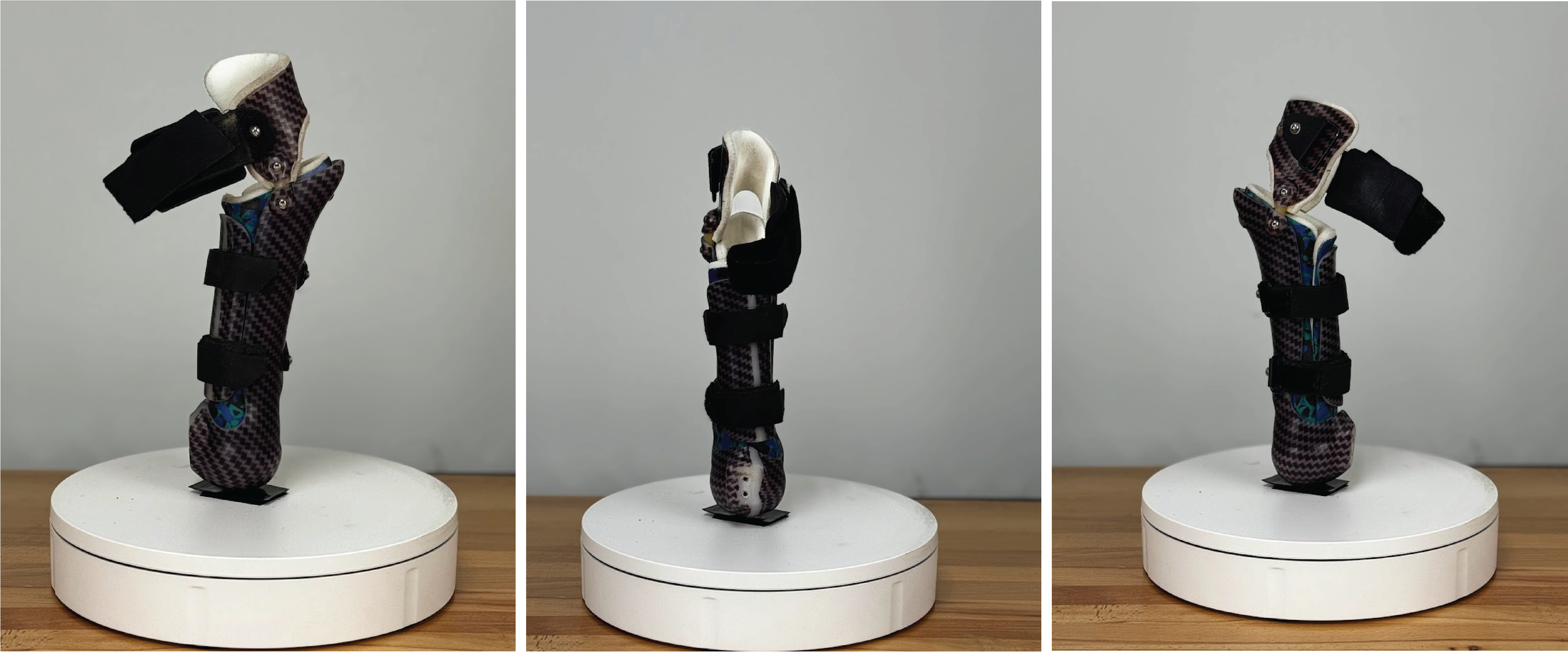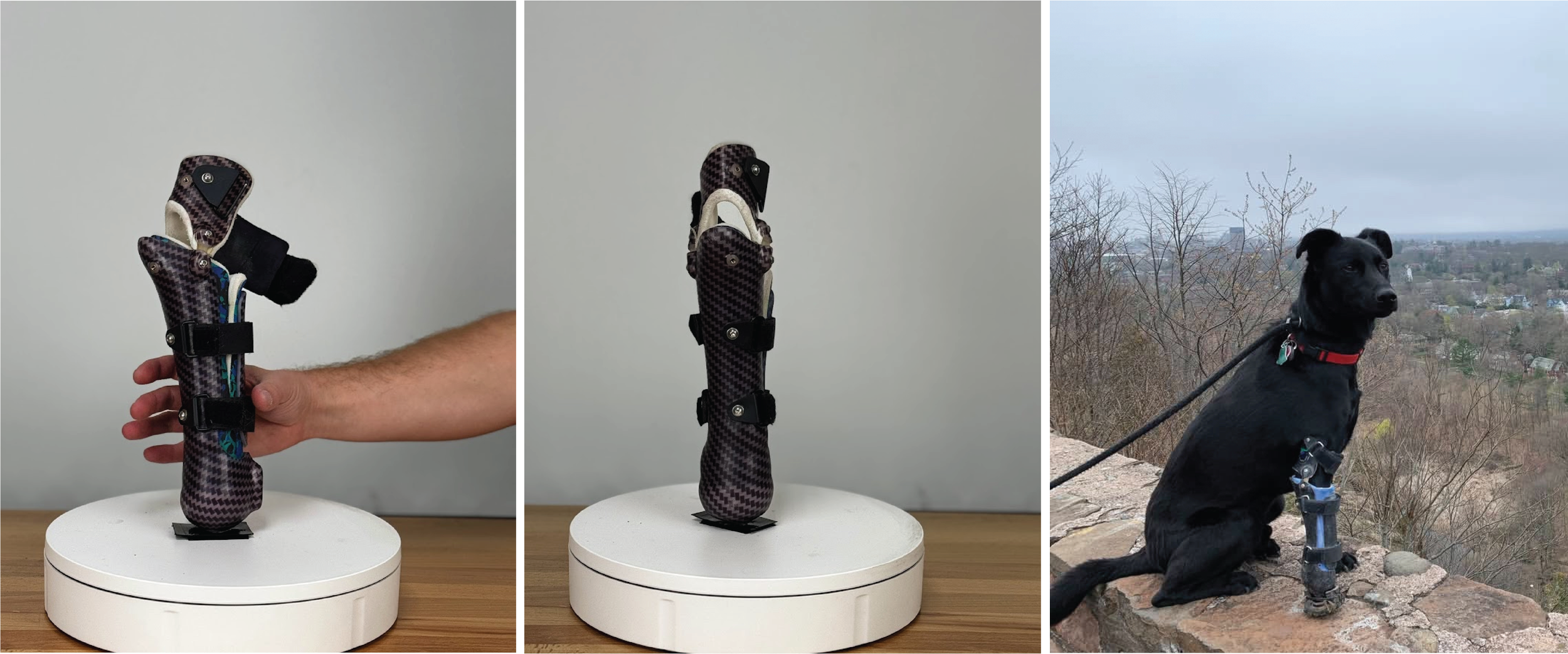
Key Areas of Successful Prosthetic Implementation
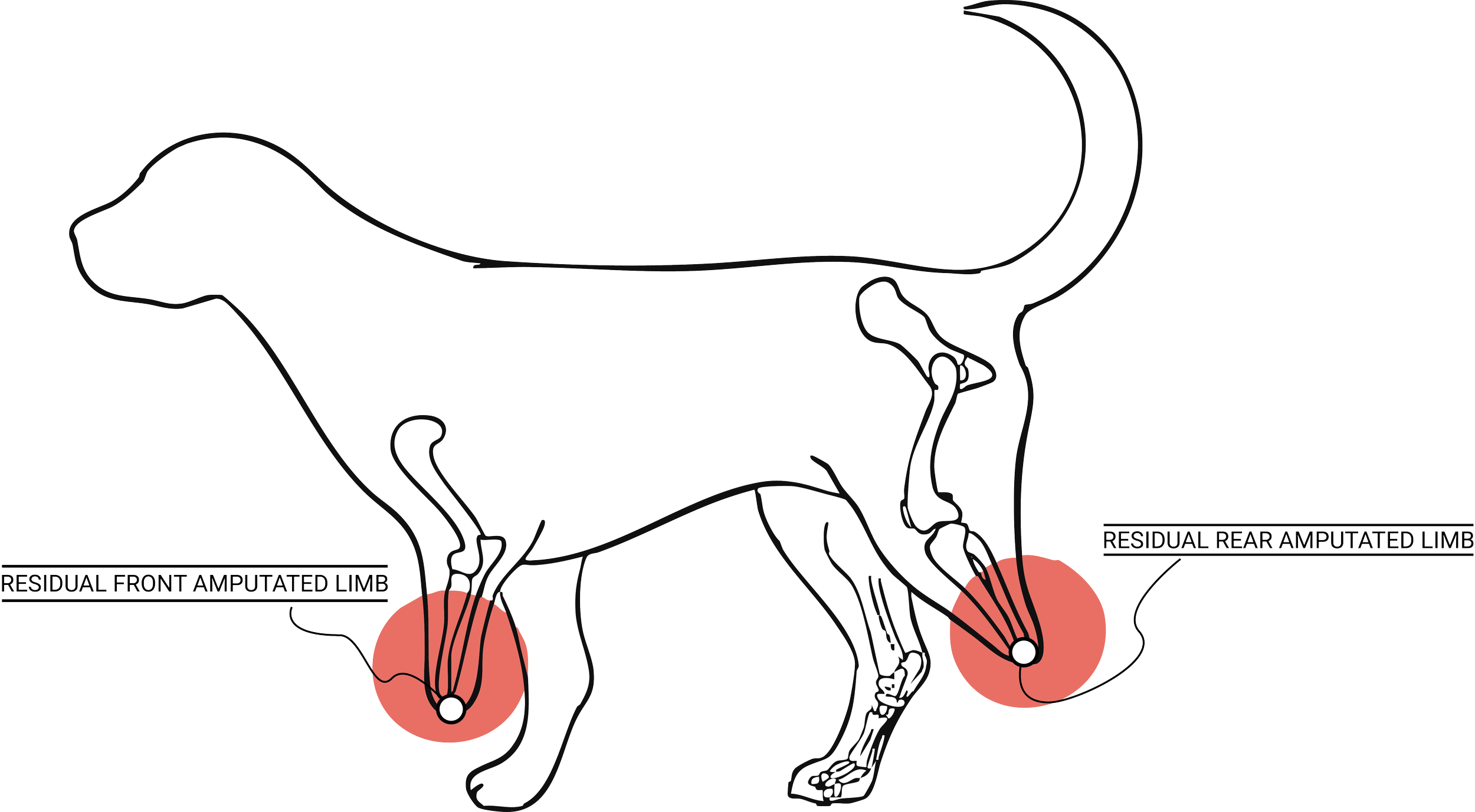
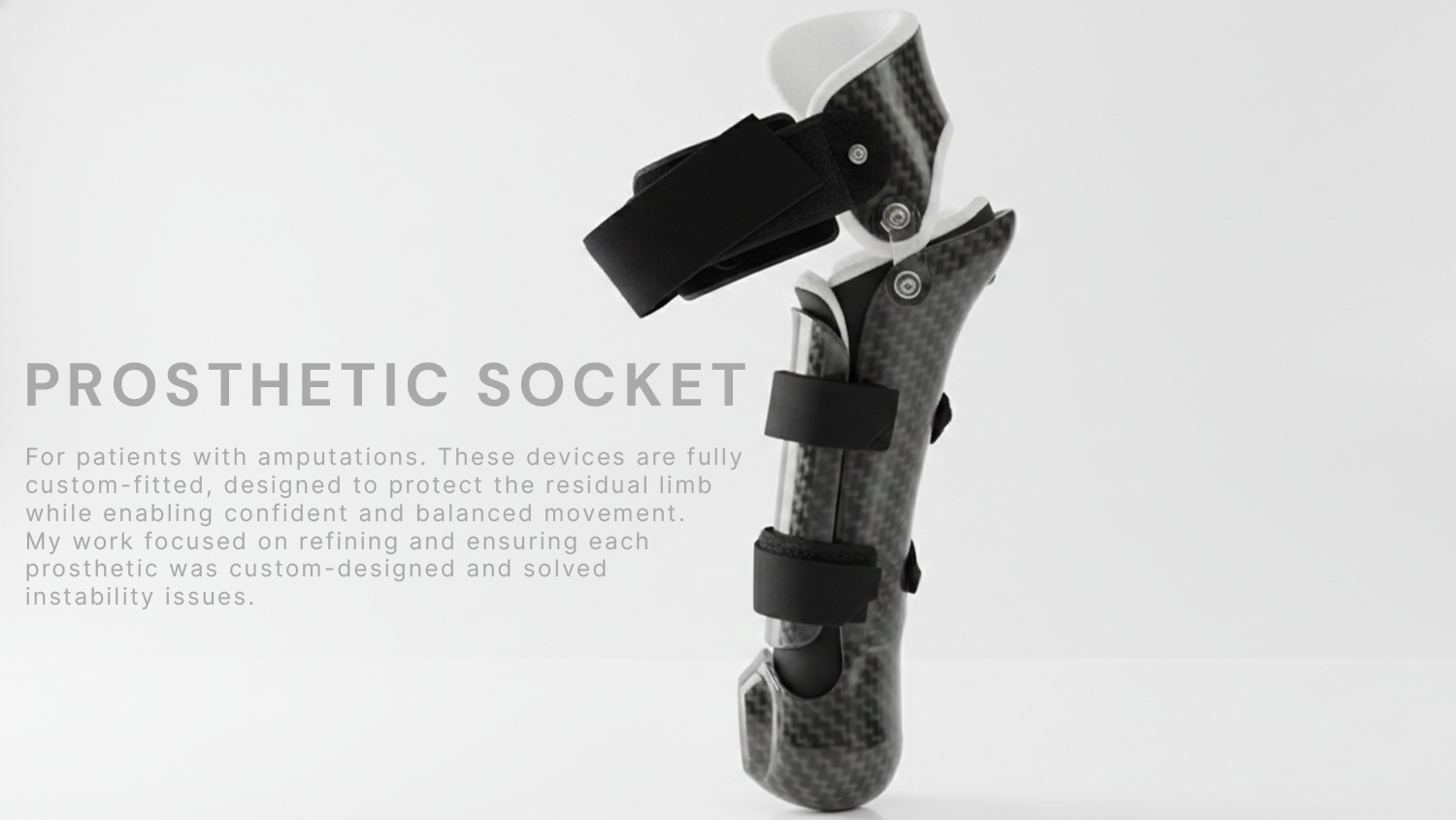
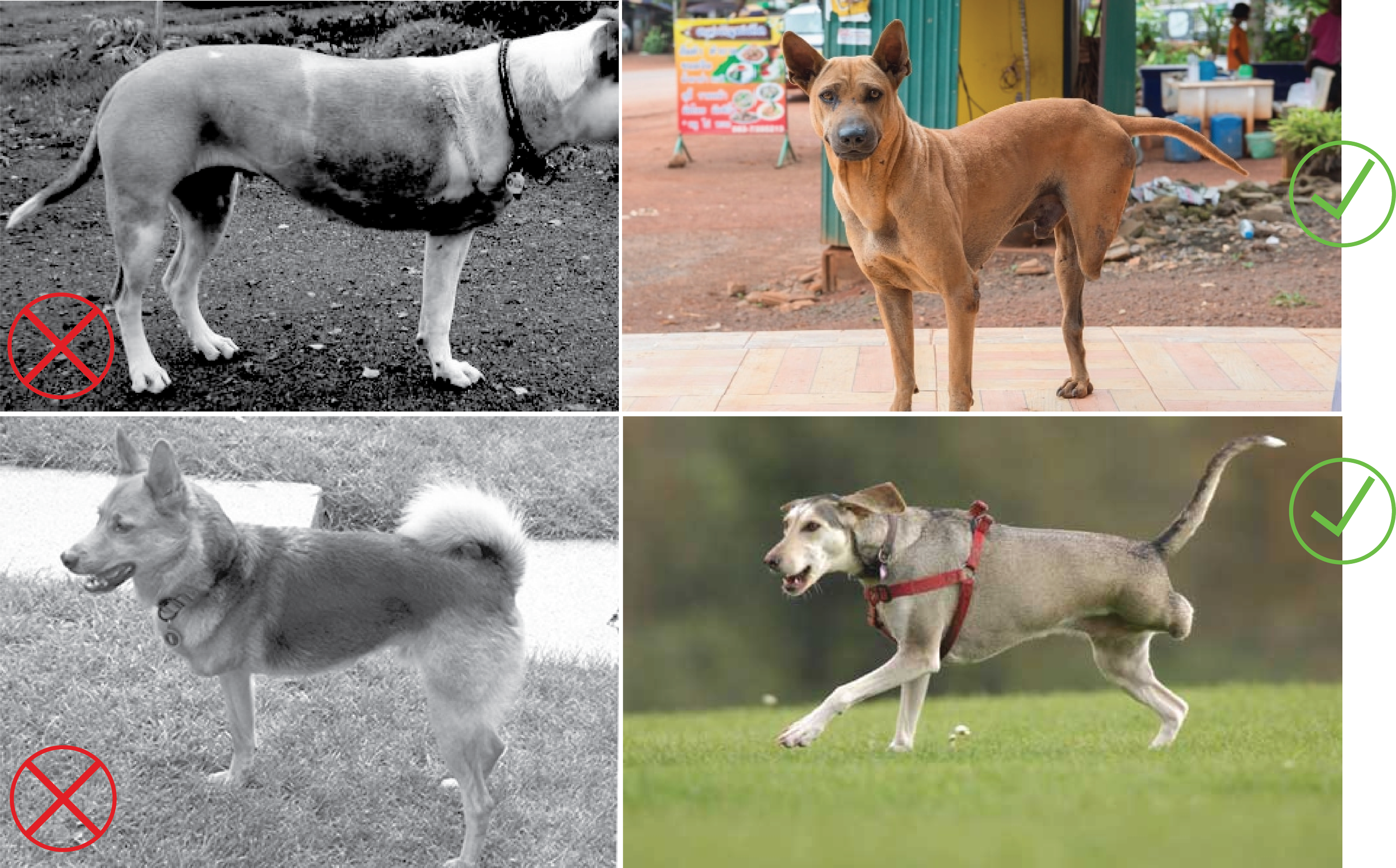
Designed specifically for residual limb patients, this iteration leverages the strengths of vacuum forming to provide a cost-effective, durable solution for partial amputations. This strategic pivot allowed for a more refined fit and better patient outcomes within existing CNC and forming workflows.
Process & Breakdown
Each prosthetic was designed around the patient's unique anatomy and mobility needs. The system combines a liner for soft-tissue protection and a vacuum-formed shell for structure and stability.
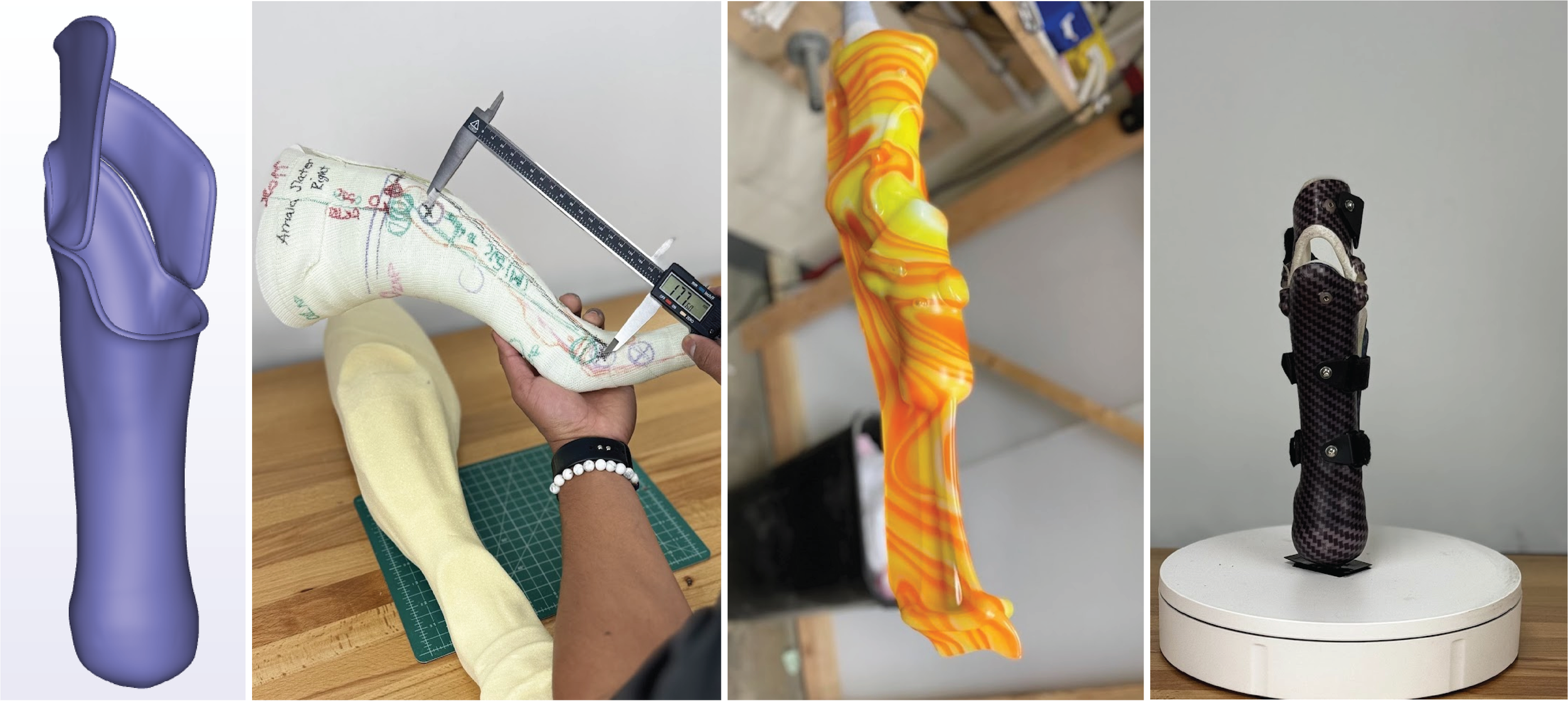
Starting from a 3D scan of a physical cast, I developed the prosthetic geometry in CAD, validating all anatomical measurements against the patient’s contralateral limb. This data-driven model was then translated into a CNC-machined foam mandrel for final vacuum forming.
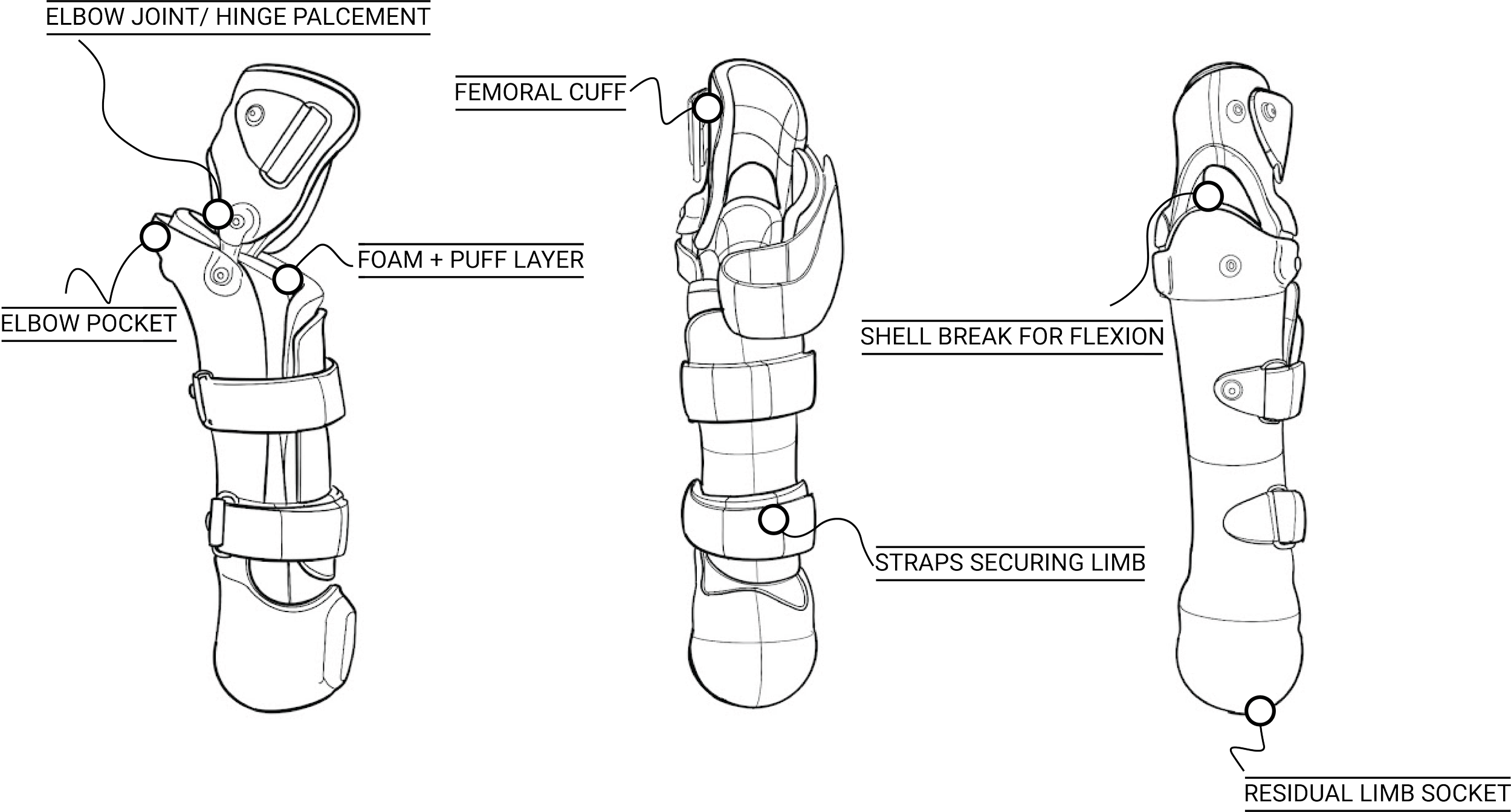
For forelimb prosthetics, a cuff was incorporated to provide upper-limb support and secure the device without restricting movement. Depending on the patient’s needs, a hinge mechanism was added to protect the residual limb while maintaining flexibility.
Final Product (Front limb Prosthetic)