Areas of Opportunity (Clients former Prototype)
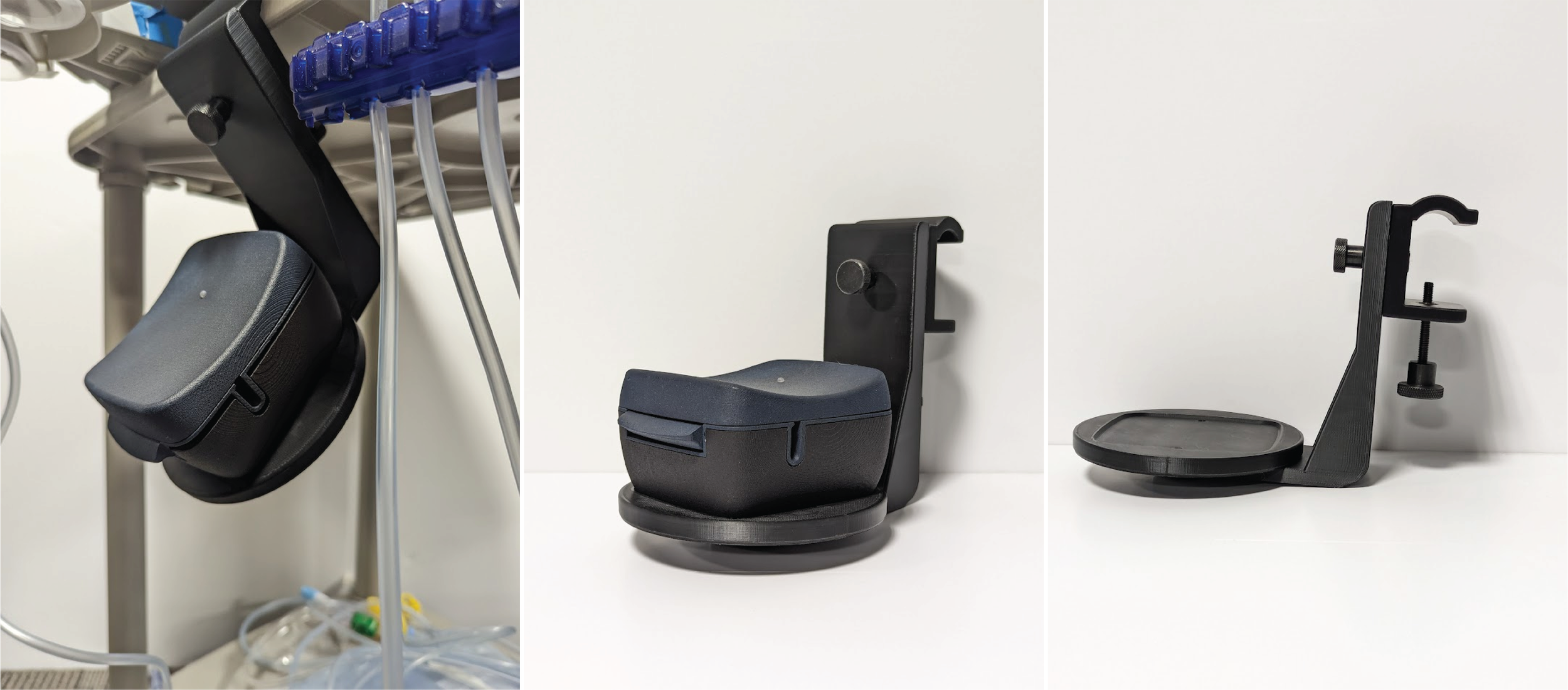
Unstable Positioning—The original prototype failed to keep the medical product parallel to the ground, disrupting dialysis fluid flow.
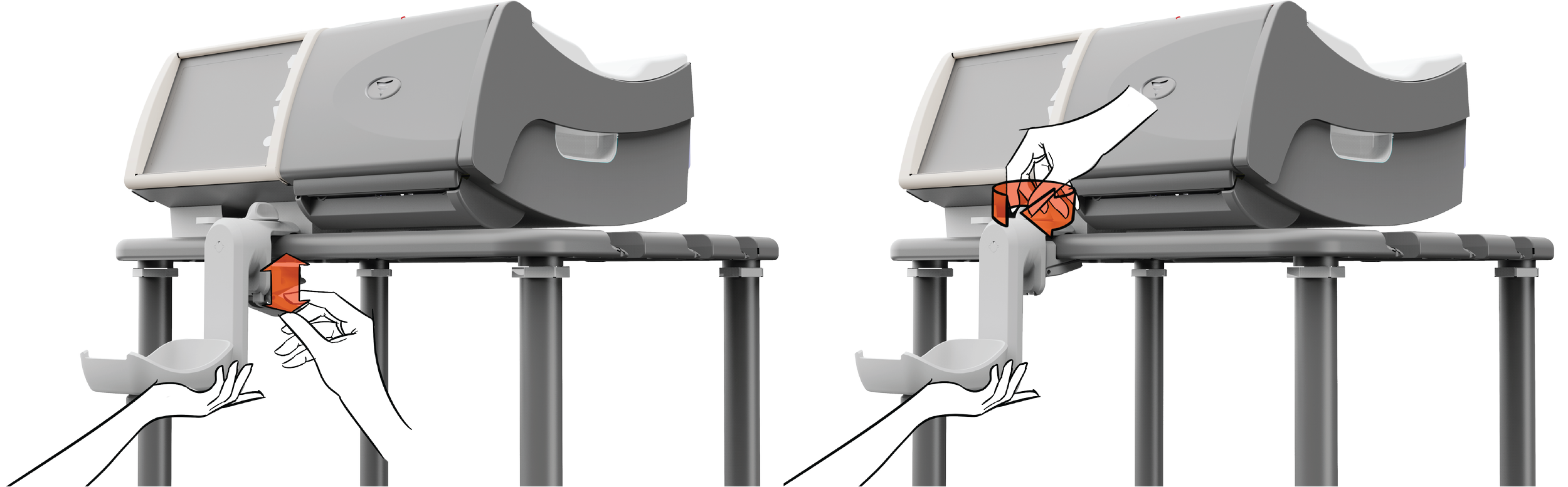
Difficult Usability—The clamp required constant manual force to stay secured, making it cumbersome for medical staff to attach or remove from the dialysis cart or IV pole.
Lack of Security—The holder’s swiveling issue created a risk of the device falling if the patient moved, potentially ripping the dialysis line, leading to danger.
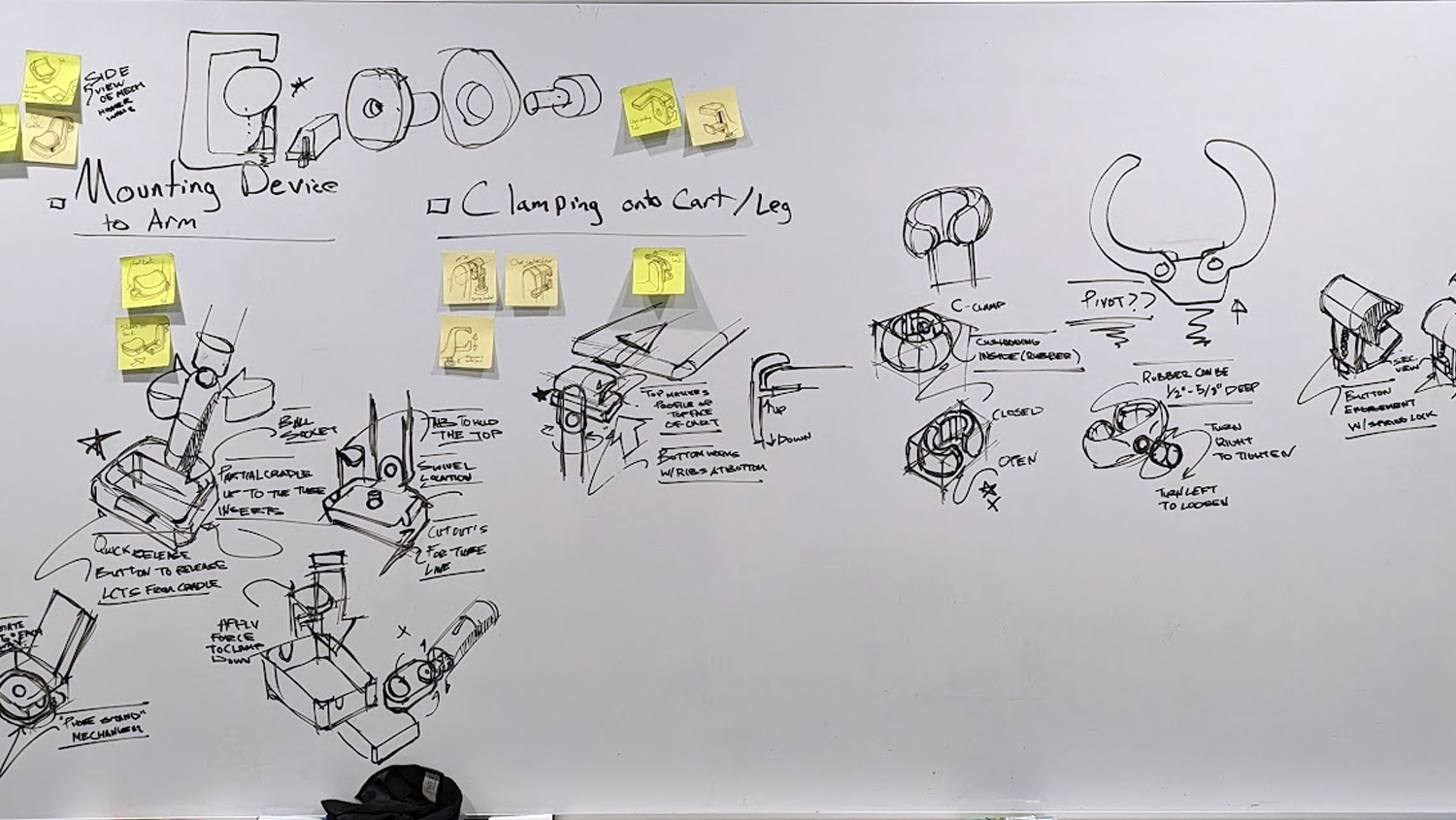
Initial Brainstorm
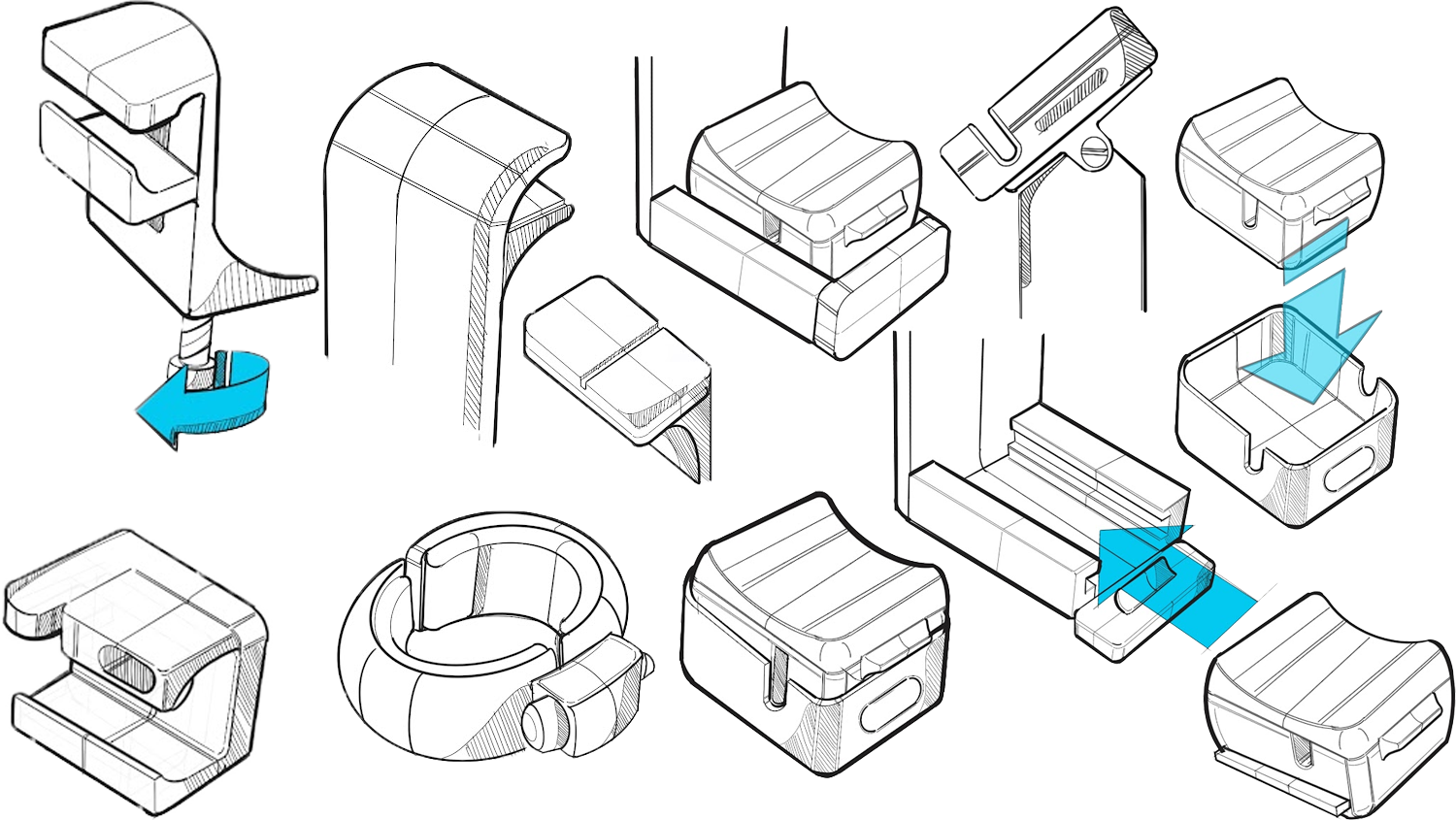
Building upon the limitations of the current prototype, I explored various clamping mechanisms that would:
Ensure a secure & stable grip on both the cart and IV pole
Eliminate the need for manual force when securing the clamp
Prevent accidental dislodging, even if the cart is in motion
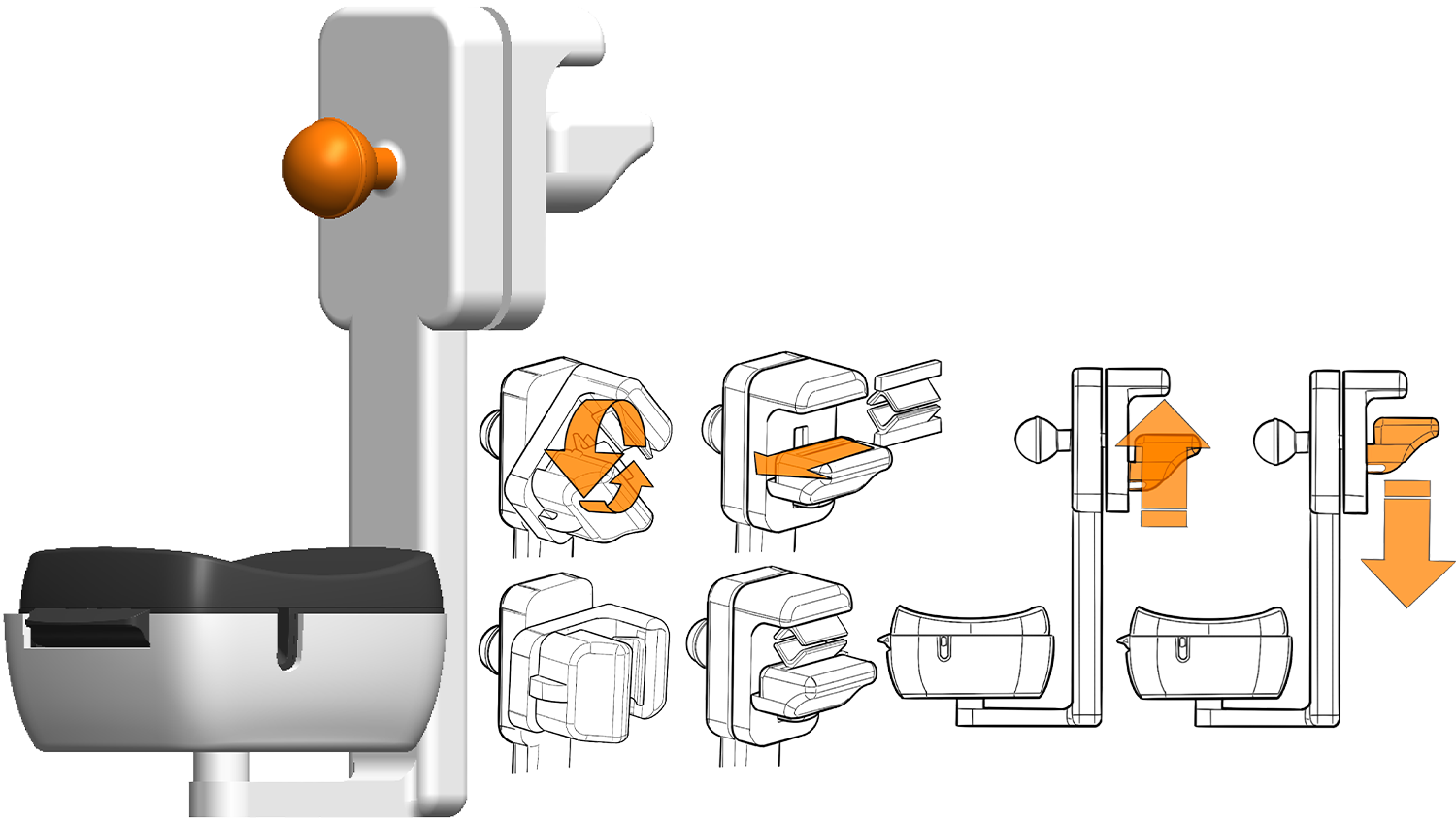
Concept A Holder
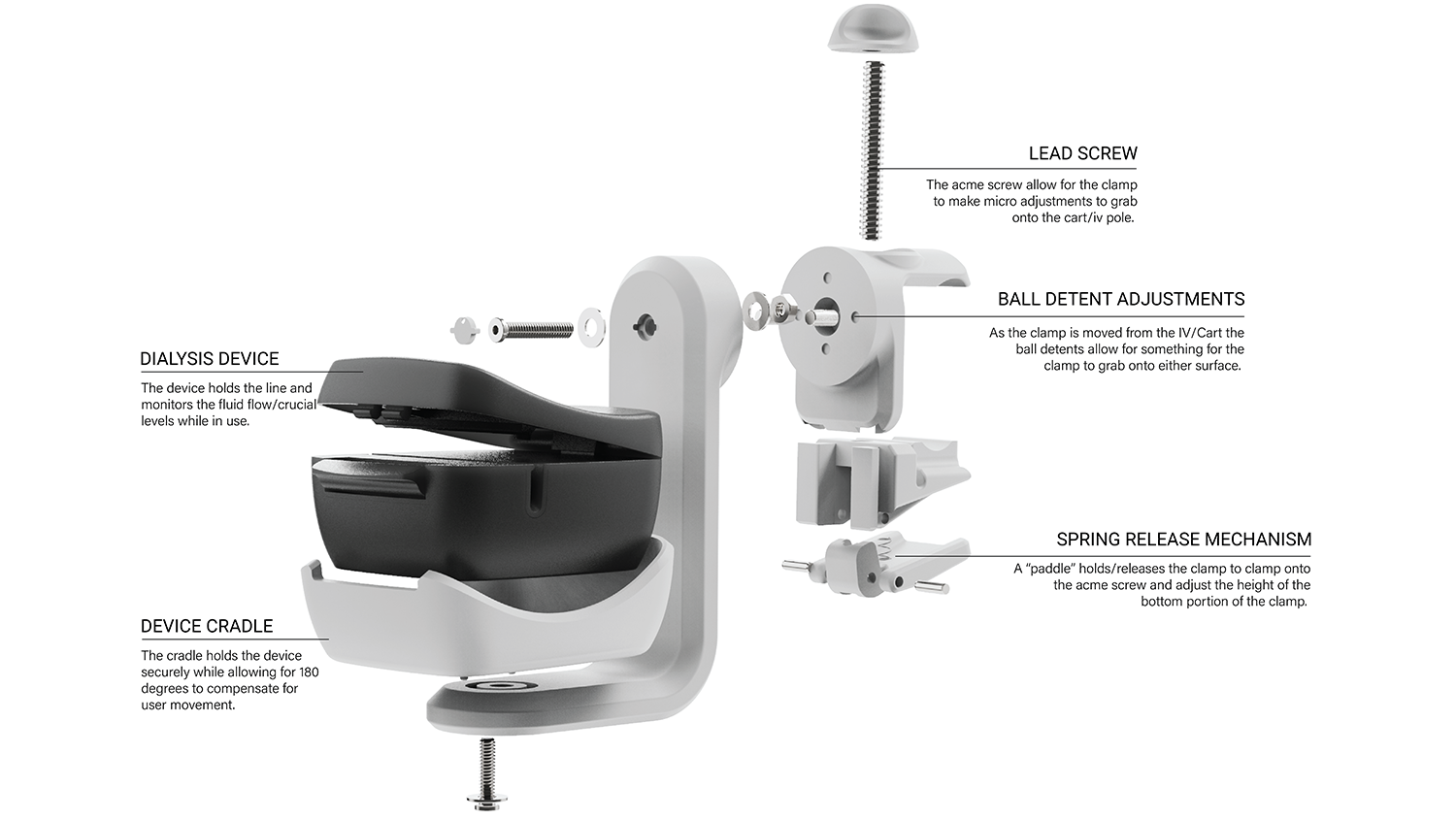
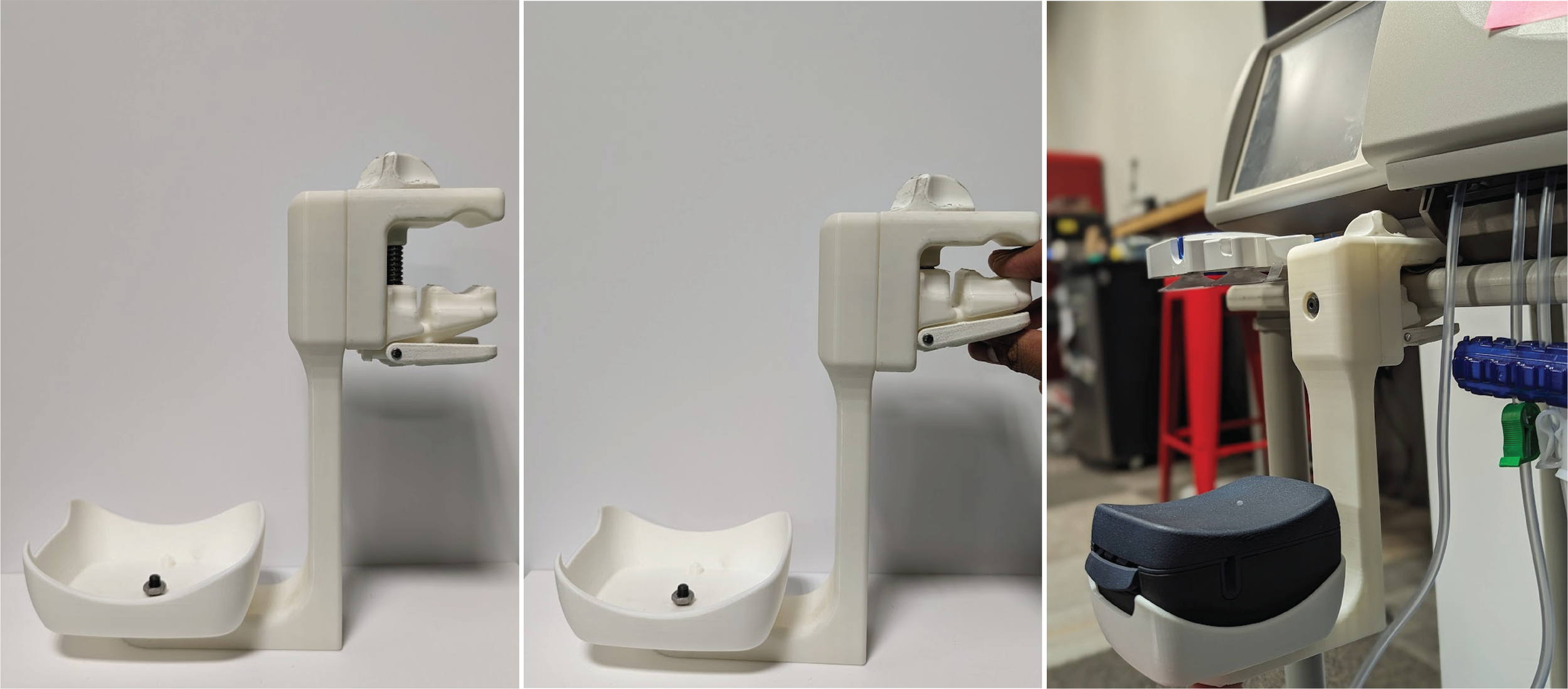
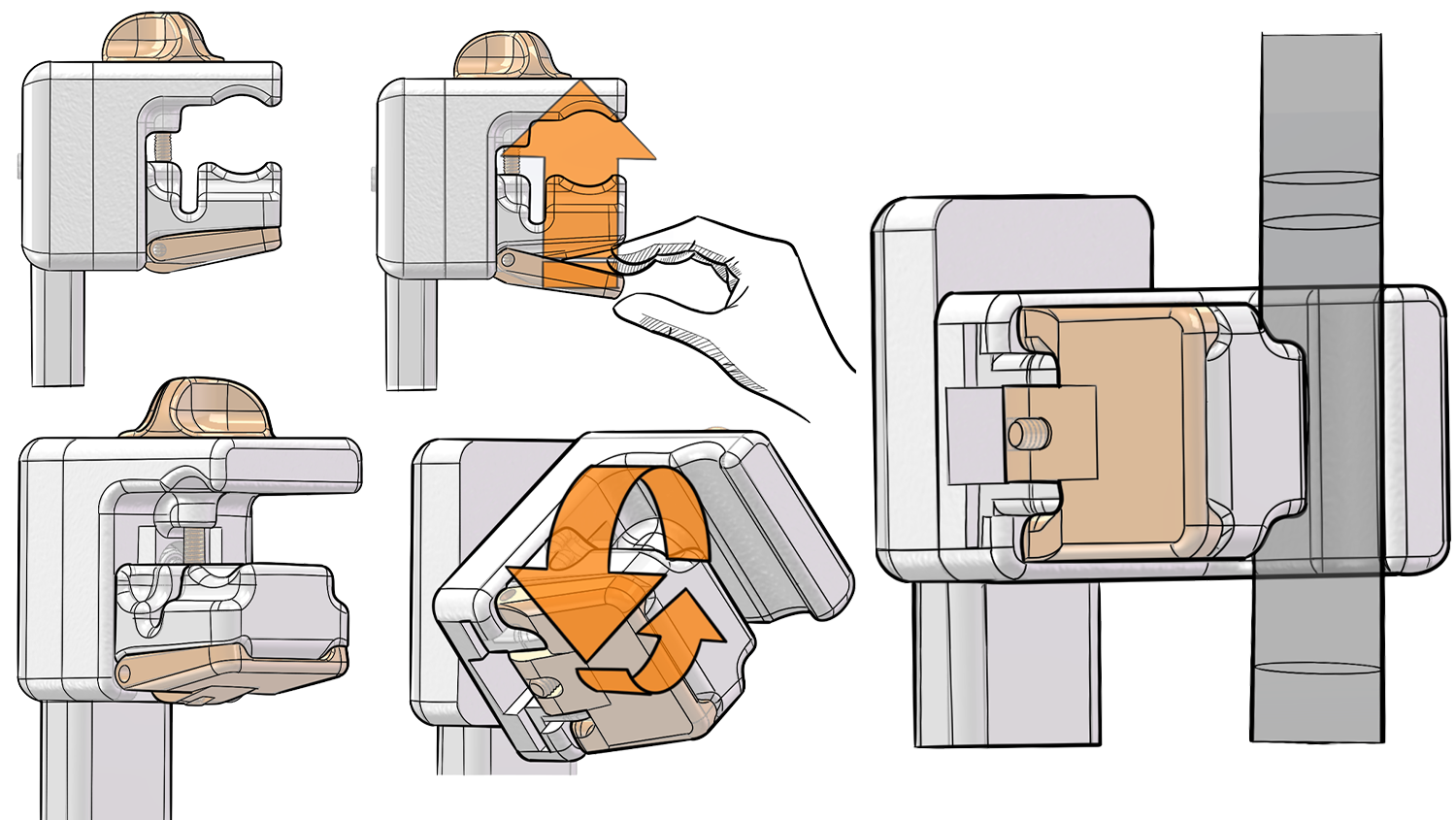
A ¼"-20 threaded steel knob allowed the back section to pivot 90°, creating a stable clamping action
An optional IV-pole clamp was developed early on, but later removed to streamline the design
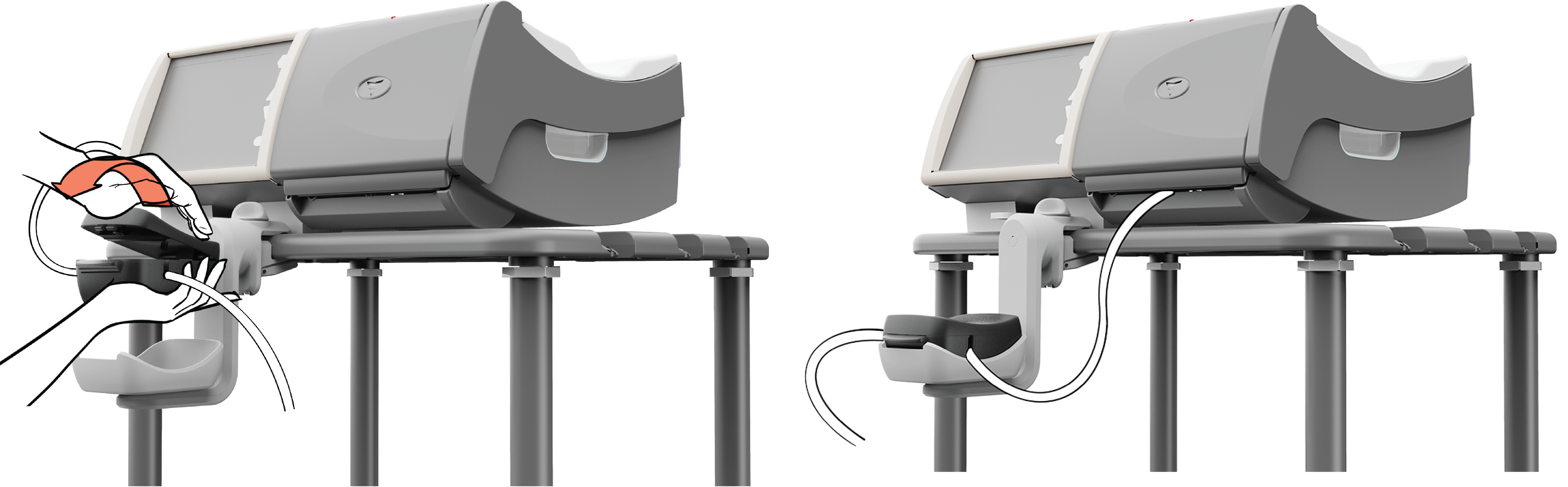
Magnets were integrated into the cradle to keep the device locked in place during treatment
Concept B Holder
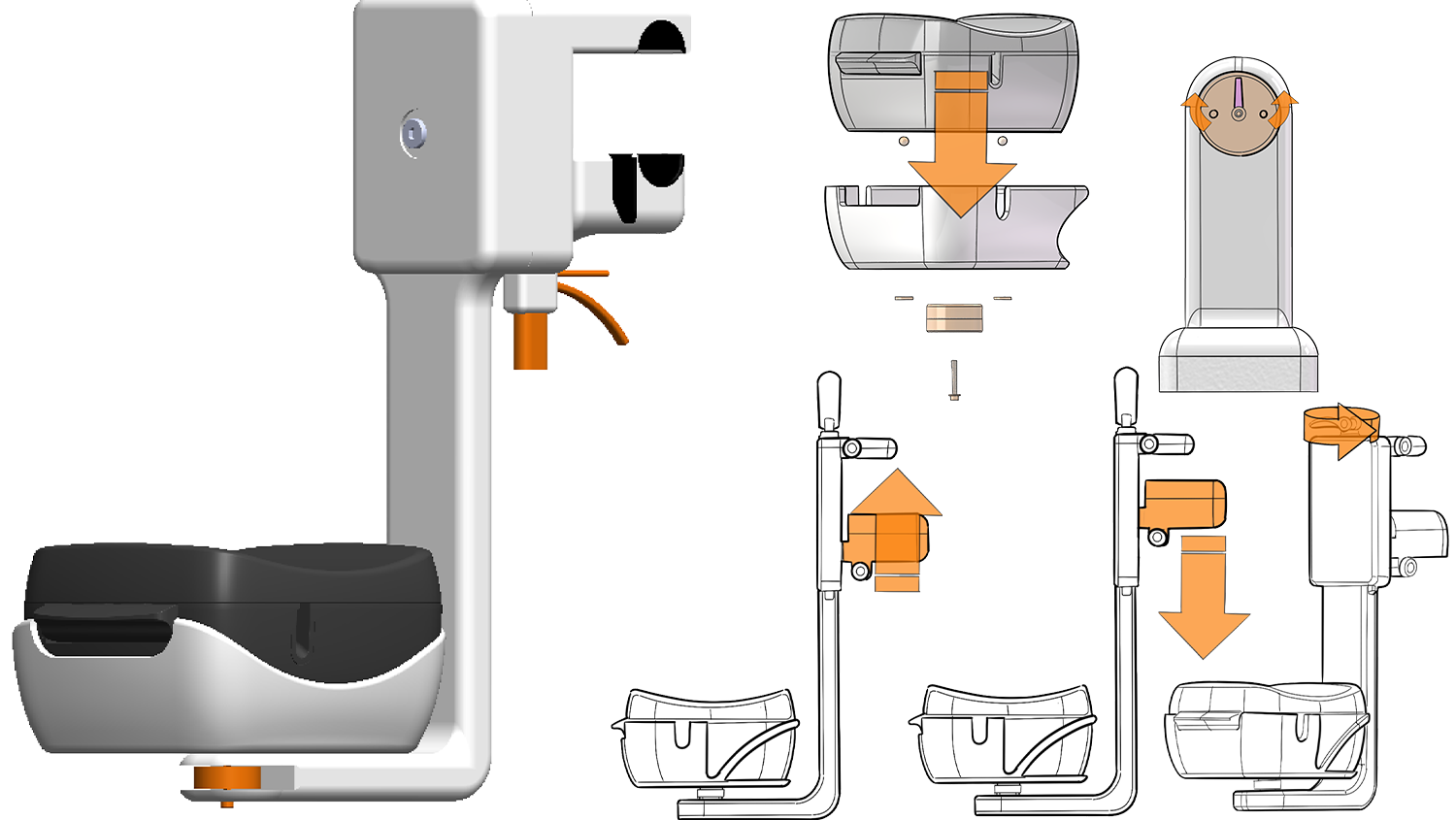
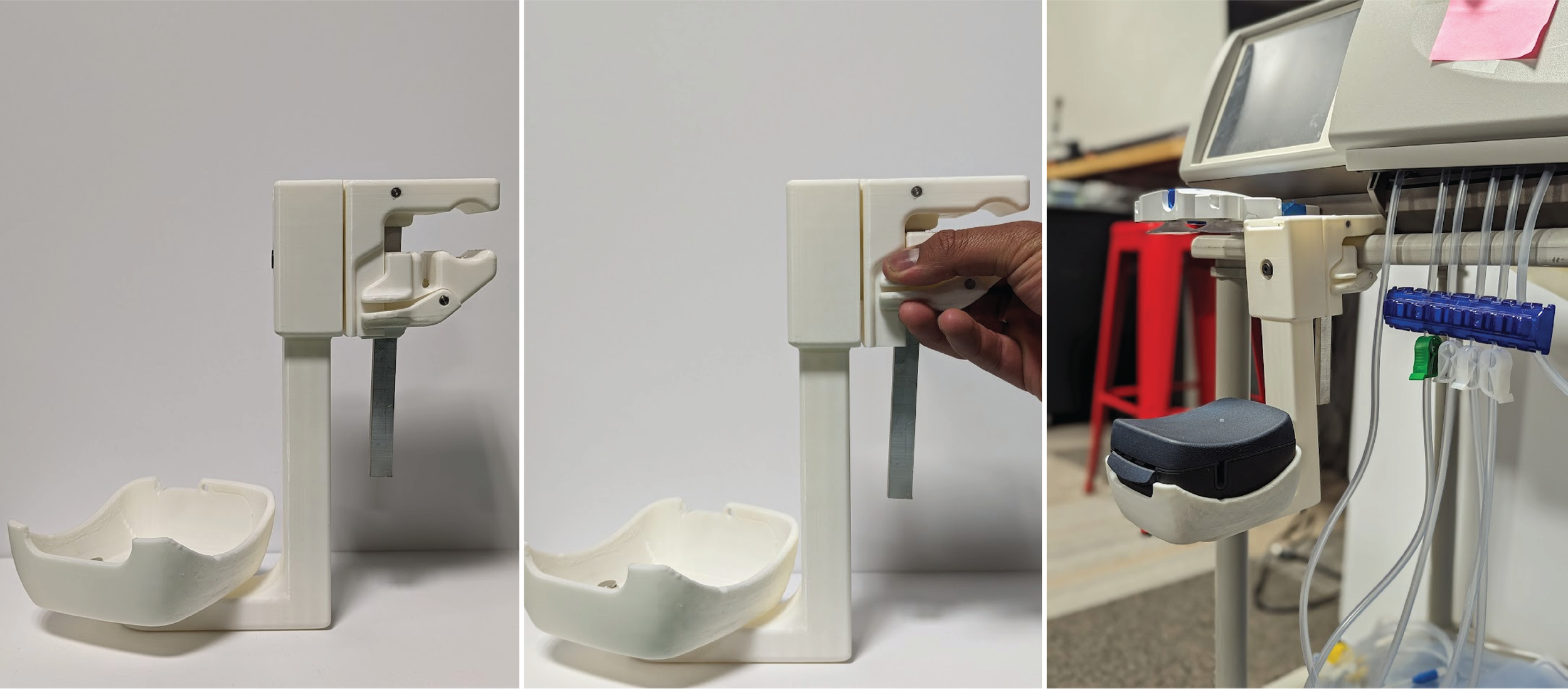
Replaced the knob with a handle-driven clamp for easier user operation.
Introduced four contact points to enhance stability on both the IV pole and cart.
Maintained the pivoting mechanism, but, similar to Concept A, the post was too elevated, posing a risk of pinching or tangling dialysis lines.
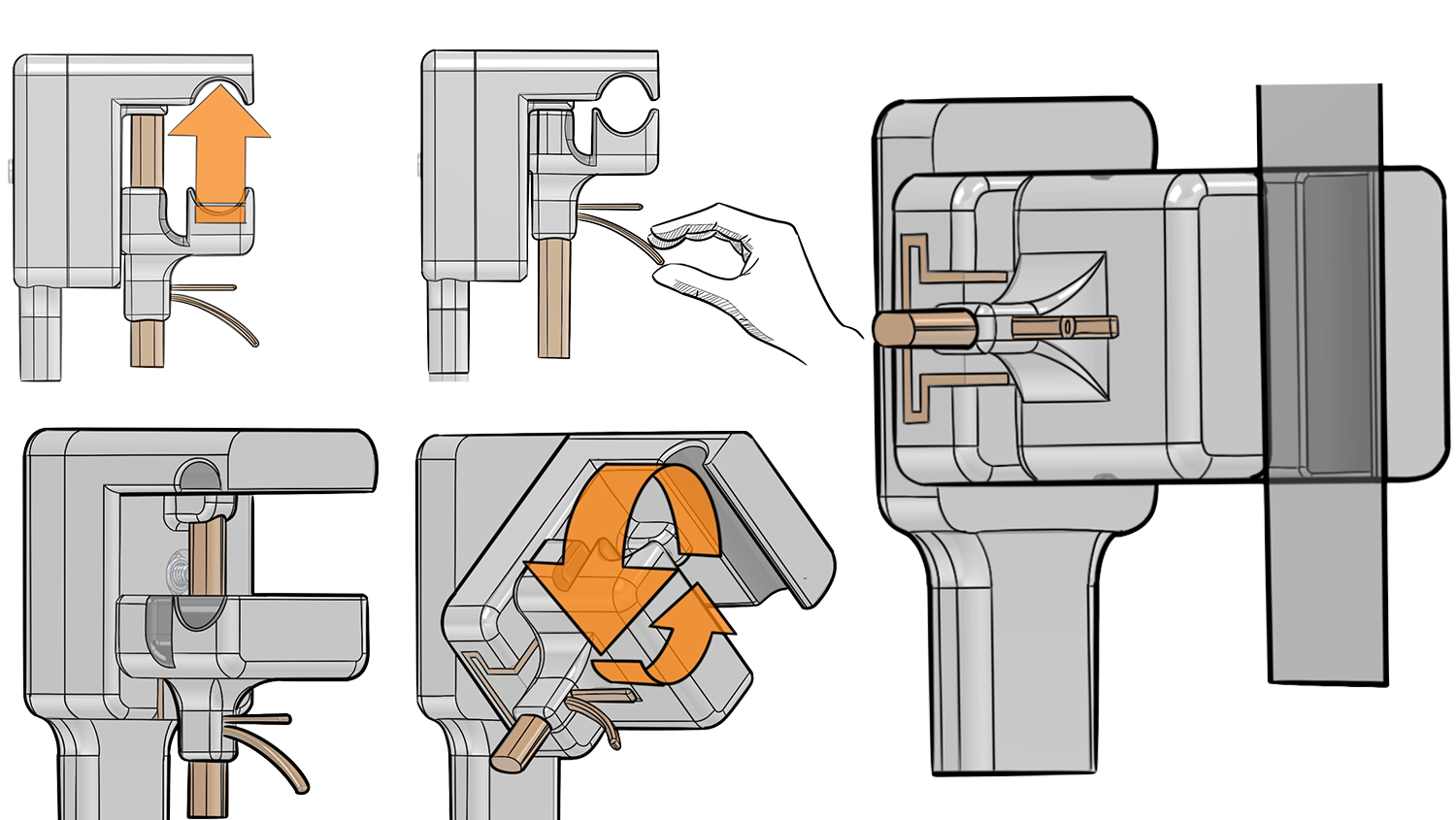
Final Product
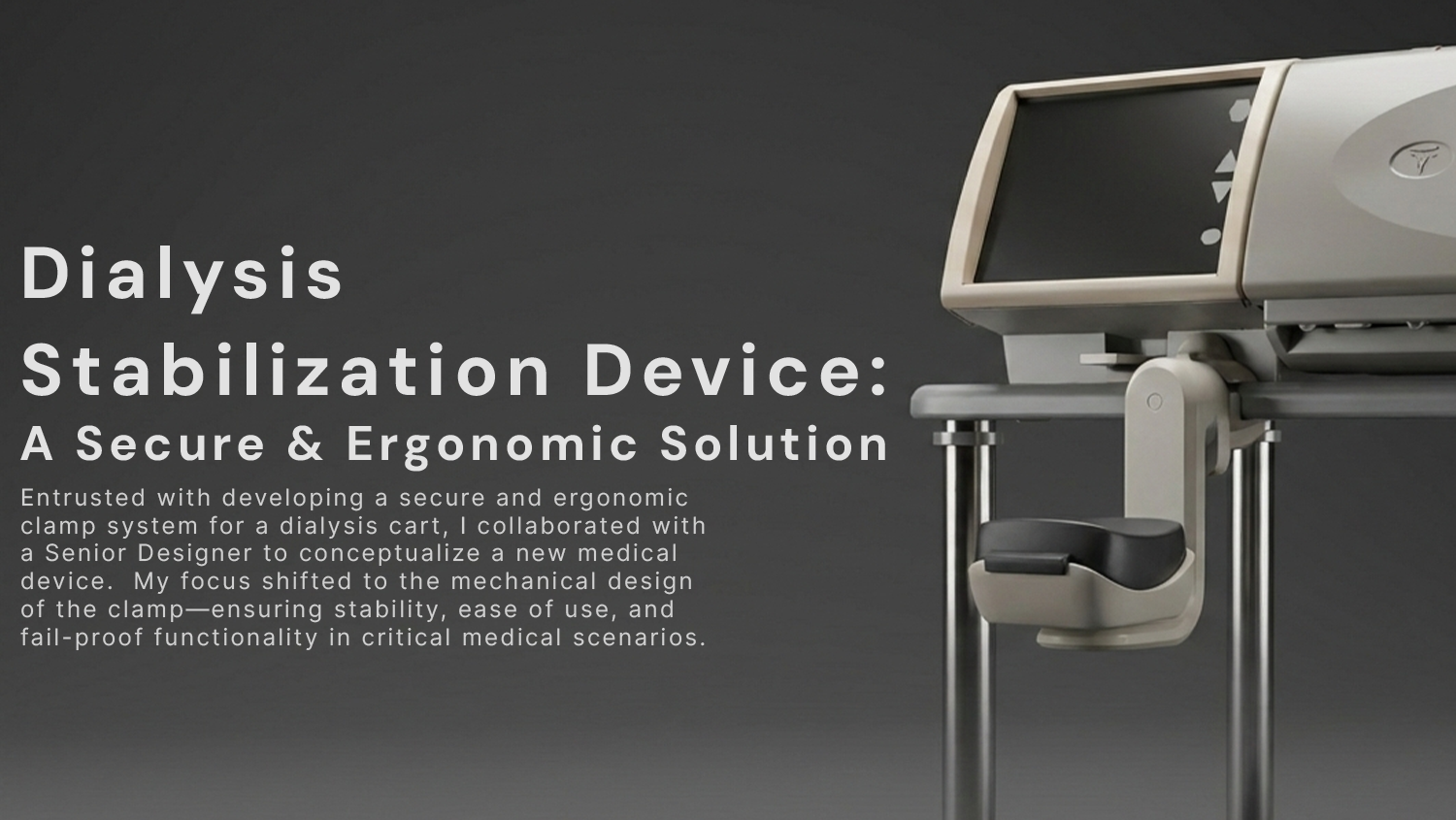
After rigorous testing and evaluation, Concept A was selected as the final design due to its:
Ease of use – The refined mechanism required minimal effort to secure the holder in place.
Simplified hardware – Eliminating unnecessary components reduced complexity while improving reliability.
Uninterrupted dialysis line freedom – The design ensured that tubing and cables remained untangled and unobstructed during use.